Showing posts with label Indian. Show all posts

Saturday, 14 July 2012

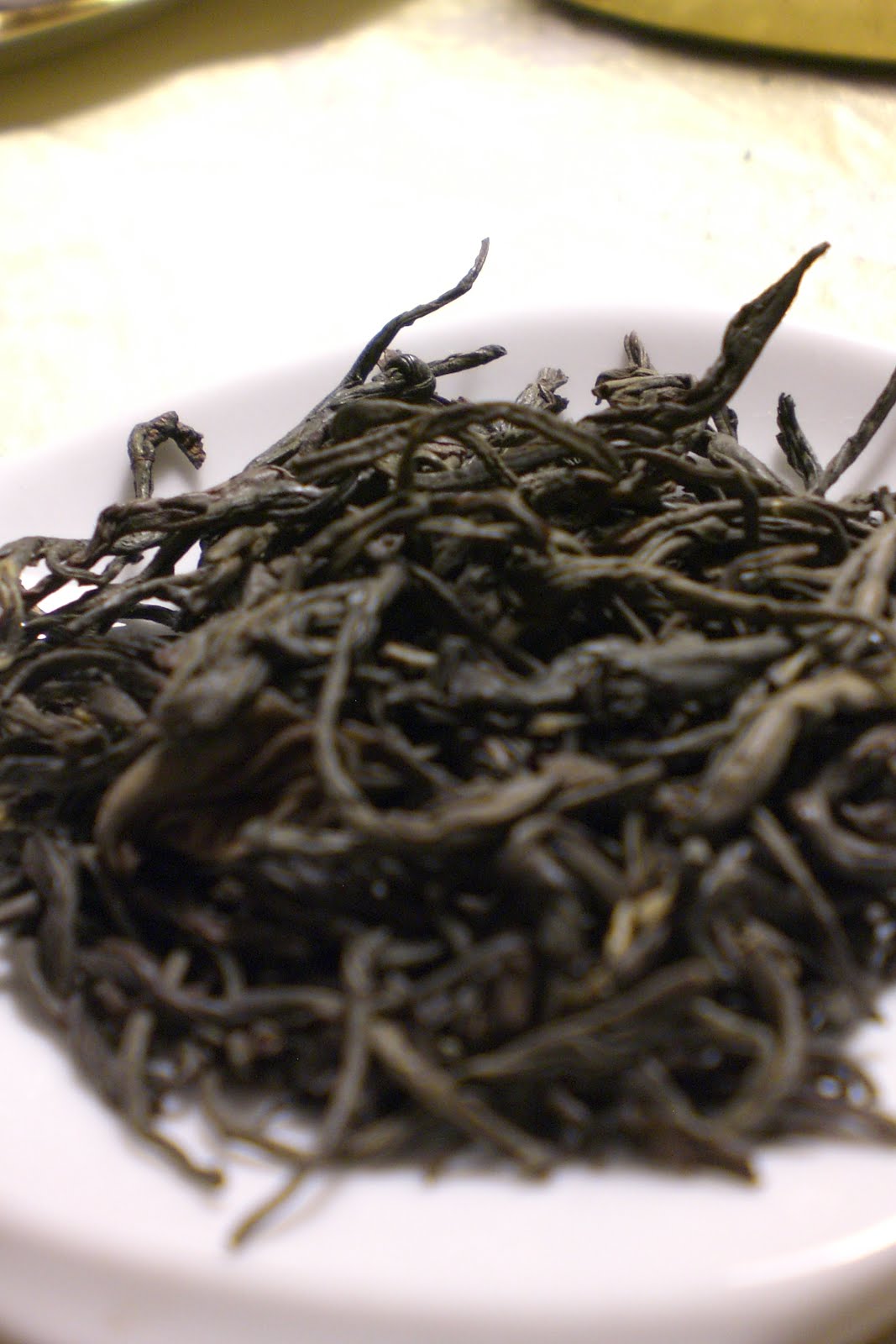
Balasun Darjeeling 2nd Flush 2011


Name; Balasun Darjeeling 2nd Flush 2011
Type; Black, India, Darjeeling, Balasun, SFTGFOP
Price;
£ 8.00 for 50 grams from Anteaques.
http://www.anteaques.co.uk

Brewing; 4 grams for .6 litres, 3:30 seconds at 100 degrees.

Review; If the reader hasn’t caught on yet, Anteaques is usually my go to tea shop when I’m in dire need of a good cuppa.  Anteaques is where I have tasted the finest Darjeelings.  Andrew one of the owners goes to extreme care with selection of his teas and Balasun Darjeeling is a prime example.  Anteaques also has the highest level of selection of Darjeelings in the UK.  As I stated earlier second flushes are usually the preferred brew of a Darjeeling, and Balasun offers a prime example of an excellent second flush.

Balasun Darjeeling is Anteaques’s answer to Goomtee when they ran out of that precious dew.  It’s got much of the same muscatel tones, yet to be completely honest carries a bitterness if it is over or under brewed.  I have had to order this tea many times to get it just right, but it is well worth it.

A friend I was drinking with at the time described it as ‘very subtle, yet lots of perfume’.  I could not agree more, this Darjeeling is too fine for the likes of milk and sugar, and opens up to a beautiful honey liqueur reminiscent of mead and muscat wines.  Subtle start leads to a more complex sweet finish.


 All in all, this is a wonderful tea.  My only complaint would be the price, however that is not justified.  This is half of the price of the mediocre First Flush I drank from Jing, and at a quality that is un-rivaled this year.  

Enjoy

-Tea Fan

Tuesday, 5 June 2012

Darjeeling 1st Flush Supreme 2011


Name; Darjeeling 1st Flush Supreme 2011
Type; Black, India, Darjeeling, First Flush.  Okayti Estate (?)
Price;
£ 16.00 for 50 grams from Jing.
http://jingtea.com/tea/type/black/darjeeling-first-flush-supreme
 Appearance: long unbroken leaf and bud showing typical brown and green leaves and silver tips
Infusion: fawny gold
Aroma:  fragrant, warm, fresh and light
Taste: clean, crisp and clear with a rounded, satisfying and quenching finish”

Review; Ah what did I say in my last First Flush Darjeeling entry, they are my favourite?  If the reader(s) haven’t caught on yet, I ordered quite a bit from Jing tea recently.  Trying their Darjeeling 1st flush Supreme now; this comes from the 2011 batch, so unfortunately it can’t be taken to compare with the link to the 2012.  Also I foolishly did not write down the tea estate name, nor can I seem to find it online, so we’ll assume this comes from the Okayti or Goomtee estate (as I know Jing has lots of dealings with both of these).

The leaves were a bit crushed for my liking, but hey, all that matters is the taste.  Aroma standard hints of plastic that I am growing to associate with Jing.  The tea has a nice muscatel aroma, and the peppery aroma that I love.  But smells green.  This is my biggest complaint in first flush Darjeelings, but seems to be a growing trend. 
In the past 5 years, many of the estates in Darjeeling have taken to making their first flush Darjeeling green.  It’s still technically a black tea, but the leaves are green, and the brew could almost be mistaken for a raw pu-erh or an oolong.  When making first flushes in this less oxidized manner, I believe the tell tale muscatel aroma is lost, and often times just aromas of hay, and bitterness remain.  

Now on to this tea the leaves confirm, far too green for my usual liking but, hey all that matters is taste.  And what a surprise, it carries much of the tell tale Darjeeling signs.  Slight muscatel aroma, bitterness, freshly dried hay in the sun.  I let a cup of this cool and I could taste lilies, which is a development on this tea.  Astringent and bitter, but most darjeeling’s have this.  As I drink more cups of this tea, it does grow on me.  A soft fruit edge, and it is light enough to be drunk easily.  

All in all, its passable.  My only complaint would be the price.  First flush Darjeelings are more expensive than second flush usually.  This is no different.  16 pounds for 50 grams though is taking the mick.  At most this Darjeeling should be worth 5 or 6 pounds.  

Enjoy

-Tea Fan 

P.S. Did anyone notice the incredibly vague description Jing did on this tea? Clean crisp and clear.  That could describe anything from window cleaner to bleach.

Monday, 2 April 2012

Bouteaque Blue Mist Reviewed Again


Name; Bouteaque Blue Mist
Type; Black, India, Nilgiri, Coonoor Estate

Price;
£ 5.55 for 50 grams from Eteaket.
Review; OMG. I hate to start a review like that, and I thought I wouldn’t ever review the same tea twice but seriously, wow. Here’s the link to my first review (http://criteacism.blogspot.co.uk/2011/05/bouteaque-blue-mist.html).
So in my first review of Eteaket’s pride and joy I tried it in their shop, and I pose a question of who is to blame; the tea or the tea shop? The answer clearly lies with the staff to the tea shop. I recently acquired some of this tea and in the past week I’ve had 5 pots of it. It is very nice, and I can see how it has won many tasting awards.
As per my problem when I first tried it in Eteaket, do not let it over brew, if you do you lose all of the flavour and it becomes fit only for milk and sugar. Catch it before, probably around 3 minutes, maybe 2 minutes and 30 seconds, and you get a wonderful bouquet of flowers. Roses, and gardenias, and maybe just a hint of caramel. Brew it til it’s the colour of light amber. I even like to let it cool a little bit as then I can let the liquid sit on my tongue and absorb the flavour. This tea rivals even some nice Nepalese teas I’ve had.
When I first opened the packet I was a bit disappointed in the leaves, long and slender, much like an orange pekoe grade, lacking any luster. They unfurl beautifully though in the tea pot and one can see how the flavour is preserved so well. The price might be a little steep (ha, steep!) but c’est le vie, enjoy tea and splurge. Well worth its money than the crappy Darjeeling last week.
This is probably the nicest Nilgiri tea I’ve had, so hats off to you Erika, though don’t let your staff ruin this delicious tea.
Enjoy!
-Tea Fan

P.S. Thank you readers! March 2012 was the most reads my blog has had, stay tuned for a super critical evaluation on Mariage Freres

Sunday, 19 February 2012

Margaret's Hope 2nd Flush SFTGFOP


Margaret’s Hope
Type; Black, India, Darjeeling, SFTGFOP, 2nd Flush

Price;
£ 2.60 for 50 grams from Anteaques.

http://anteaques.co.uk/blacktea/margaretshope

“The teas of the Darjeeling region are often known as the "champagne of teas". They are prized for their lighter tastes and fruity aromas. The Margaret's Hope Estate is over 140 years old and produces some of the most popular Darjeeling teas. This tea is picked in early June (2nd flush) and has all the wonderful Darjeeling flavours.

Classified as "Finest Tippy Golden Flowery Orange Pekoe" (or FTGFOP), this tea is a top grade Orange Pekoe or large leaf tea. Like many other estates in Darjeeling, Margaret's Hope's tea bushes grow slowly due to the high altitude. This plays a large part in producing the tea's characteristic and highly prized taste.”


Review; Ah Darjeelings. One of my true loves. The observant reader will probably have noted that I have an obsession with Darjeelings. Those that know me in real life know that I will do almost anything to get my hands on a delicious first flush. The Margaret’s Hope is a second flush, and will probably receive more of a scathing review than the previous two other Darjeelings reviewed.


Margaret’s Hope has a name for itself. Name-branding isn’t unique to clothing, and occurs very frequently in the tea world. Lets face it, this tea blog is about name-brands. Margaret’s Hope due to recent acquisitions of nearby tea-estates is now one of the largest tea estate in the Darjeeling region of India. And for such a surprisingly large area, it is blended (all teas are blended in the estates) consistent. 2nd Flush, strong muscatel notes on the nose, but surprisingly little flavour to compare with the taste. A beautiful tea in its own, but branding itself as the “Champagne of teas” I would not say is truthful.


Really one cup or so of Margaret’s Hope will due it justice. A bit of a plane jane if you will in that no complex taste really develops, nowhere to go after that initial first sip. And don’t add milk or sugar! It’s a Darjeeling! Not an Assam or some Tetley tea bag for pete’s sake. I have now tasted the Margaret’s Hope for four years and as I said above, it is consistent. There is little variability in it unlike other Darjeelings (I’m looking at you Goomtee, oh you were so delicious last year…and surprisingly disappointing this year).


Enjoy!


-Tea Fan

Sunday, 15 May 2011

Goomtee Darjeeling 2nd Flush FTGFOP1


Goomtee Darjeeling

"A sensational classic Darjeeling tea."
Type; Black, Indian, Darjeeling, FTGFOP1 Second Flush

Price; £ 17.50 for 100 grams from Anteaques. (Edit 17/5/2011 JING tea removed)

Review; Sending tea, and taking pictures for a friend has prompted a review of this tea. Before I get into the grit, a bias should be announced. I love Darjeeling tea more than life sometimes. This tea is also the second most expensive tea I have consumed. And it has currently ranked as my favourite. Of the 85 known estates (I'm quoting 85 as that was the number published in this book http://www.flipkart.com/b/books/darjeeling-tea-golden-brew-srijeet-book-8181891864, while some website publish numbers as high as 92), I have had the privileged of only trying a third. I've previously lamented over Darjeelings and how wonderful and fantastic they are on my review over Marybong Darjeeling First Flush. However Goomtee is perhaps the first second flush to amaze me.

Goomtee is a small estate, located high in the Himalayan mountains in the northern most region designated for Darjeeling. Perhaps this is what leads to its mythical brew. If one was ever curious about the "muscatel" tones that are so often used to describe a Darjeeling, this is the tea to base your definition. Fruity in a sickly sweet sort of way, this is most certainly not a tea to adulterate with milk or sugar. I have felt the need to put that in bold; a tea of this class, of this quality, to be ruined by such inferiour products is a sin. Floral notes can be tasted too, which bring to mind wild summer flowers growing after a storm. The fruit is hard to distinguish but I would say almost imagine a pear cider wine with cherries mixed in. Muscatel. I know its overly pretentious, but this is a tea that's best description is a mood. Calm. Tranquil. When I was preparing for exams I actually had to limit my consumption of this tea as it is entirely possible to spend hours of inner peace accomplishing nothing but relaxation. Not overly astringent, it does leave you thirsting for more.


I have actually placed an order of JING's version as I am skeptical of the quality that they are selling. An edit may appear later for this review of that tasting.

(Edit 17/5/2011 JING tea; Inferior tea, I have removed the link from the top of the page as I would not encourage people to try it as a good example of what a Goomtee should taste like. JING Goomtee tastes more like a Margaret's Hope, or a mixture of several estates. No to little astringency. Maybe a full review will come at another time, however we will see if time permits.)

Here is the wiki page to Darjeeling Tea (http://en.wikipedia.org/wiki/Darjeeling_tea) but I strongly suggest reading the above book to gain a better appreciation behind the tea industry itself. There are too many books published about "tea" without actually saying anything.

Cheerio!

-Tea Fanatic

Saturday, 14 May 2011

Bouteaque Blue Mist


Bouteaque Blue Mist

"The production of our Bouteaque Blue Mist tea from India is unique and therefore top secret. The resulting cup has complex and competing flavours that pull together to produce a refined and distinguished tea unlike anything else we have tasted. Like a private members club in Mayfair or an invite to the Playboy Mansion to party with Hugh Hefner, this tea is uber-exclusive and uber-good. Strictly for the A-list fashionista."

Type; Black, Indian, Nilgiri, FTGFOP

Price; £ 9.98 for 100 grams from Eteaket.

Review; Ask Erika what tea personifies Eteaket best and she will tell you Bouteaque Blue Mist. Winner of several tasting awards and a tea unique to Eteaket with Erika having personally visited the estate to choose the best quality. It is not often that one finds a Nilgiri tea by itself. First impression gives a distinct malty caramel notes with a flush of citrus that reminds me of a lemon tea later, hidden somewhere in the "mists". However I will be the first to state that this is not Eteaket's best tea. To me it is their Yellow Gold Oolong. This is the tea that brought me back today. In fact at a recent tea tasting comparison, Bouteaque Blue Mist tied for 6th place. I believe that if Yellow Gold Oolong had been tasted it would have taken its name sake. A separate review of Yellow Gold Oolong will come at some point. I do feel describing the production method of Boteaque Blue Mist as "unique" and "top secret" might be over the top.

Tea or Tea shop at fault?

While this tea is interesting, its not a tea that I feel I will go out of the way to own. In fact if I were to receive it as a gift it might end up being re-gifted at Christmas time. Its nice, but maybe better suited to someone else. Which leads me to the question of if its the tea I didn't like or the tea shop. I've been to Eteaket several times now, and have noticed a re-occurring problem where too much tea is brewed in their small pots. Each pot holds probably close to .5 litres. In each of these pots probably around 5 grams is added. For this size it is too much and to me brews too much on the heavy side. While I appreciate the fact that tea can be taken out, I have received my tea numerous times when it has already over brewed just waiting to be delivered to my table.

Nilgiri

Nilgiri teas are quite interesting. Wiki article below, Nilgiri's are wonderfully fragrant yet offer a good strong body. This often times led to them being used predominately in flavoured and scented teas. In my head I compare them to a Keemun or a Yunnan Indian equivalent to China. As the tea producing regions continue to shift towards Africa this may suggest a growing trend of Nilgiri's being produced by themselves. Though a recent book I have read (Darjeeling, The Golden Brew) talks about the level of marketing required, Nilgiri still has a long way to go.


To sum up my review, Bouteaque Blue Mist offers a nice burnt caramel malty tea with hints of lemon mingled. Certainly something to try, I wouldn't really rank it as a tea I would want to own.